

SECTION 1
Give your body the nutrients that it needs
The human cells that make up your body are dying and regenerating at a me of about 100 million every hour. In order for the new cells to be healthy they need water oxygen and certain amino acids, fatty acids, vitamins, minerals and enzymes to be present in your body at the time of their formation A hundred years ago it was relatively easy to absorb all these requirements from our normal foods, but this is much more difficult today
In simple terms, our foods contain protein which breaks down to amino acids in our bodies, carbohydrates which break down to sugars, fats which benak down to essential fatty acids, plus vitamins, minerals and enzymes. Fibre helps to clean out our digestive tract but does not contribute to our nutritional requirements. The processing of foods destroys many of the vitamins, and the soils that our foods are grown an no longer contain the minerals they once did. Farmers generally only add NPK (nitrogen, phosphorous, potassium) fertilizers to the soil, because that is all that plants need to look healthy, but our bodies need many more minerals than that. Nutritional supplementation has become almost essential if you want to avoid debilitating chronic degenerative diseases, which result largely from this lack of vitamins and minerals in our foods. Following are some guidelines that will maximise duances of avoiding these diseases. your
1 Eat protein for breakfast
Breakfast is the most important meal of the day. For good health it is essential that you have a good nutritious cooked breakfast. You will then last through the day without feeling any need to snack on junk or sweet foods. To do this you must include protein, which means anything that has two legs, four legs, swims or is laid. Eggs are ideal. Add a lamb chop, a small piece of steak, some chicken or leftovers from the previous night’s meal.
Eggs are one of the most nutritious foods available and a minimum of 14 eggs per week is recommended. Anti-cholesterol groups have given them an unfair and untrue reputation. A few points to remember are:
Buy free-range organic eggs to ensure they are free of antibiotics and steroids.
Eggs are best poached or boiled, or they can be scrambled or made into an omelette provided they are not overheated. Mix in some tomato, onions, cottage or fetta cheese and a green leafy salad vegetable such as rocket.
Fried eggs should be avoided as they are easily heated above 100° C and this can change the chemical composition of the egg.
Eggs can be eaten raw by including them in a nutritious drink, although you do need to be conscious of the dangers of salmonella. Wash eggs and your hands before cracking them as the salmonella is found on the outside of the eggshell, not the inside. Do not eat any raw egg that shows signs of cracking.
As explained in the section about common misconceptions, most of us do not need to concern ourselves about our cholesterol count. Even those few who do have an abnormally high cholesterol reading are unlikely to suffer adverse effects from eating eggs.
If you enjoy a cereal, eat oats, either as porridge or Bircher muesli, but follow it up with a cooked breakfast. (To make Bircher muesli, mix the oats with water or fruit juice or milk, preferably goat’s milk, and soak it in the refrigerator overnight or longer. Add other ingredients such as natural yoghurt, grated apple or other fruit, sultanas or raw honey in the morning before breakfast.)
Keep the amount of fruit, muffins, croissants and bread (or toast) that you eat for breakfast to a minimum, preferably none at all, for the reasons explained in #25 and #29.
[Fallon & Enig, Nourishing traditions, pp. 26, 436, 455; Allan & Lutz, Life without bread, pp. 86, 216; Carpender, How I gave up my low fat diet and lost 40
pounds, pp. 89-93; Enig, Know your fats, http://www.enig.com/trans.html; http://www.westonaprice.org: Clark, The cure for all diseases, p. 265]
#2 Eat a salad for lunch
most nutritious foods, and by including other colours of salad vegetables you will be getting lots of essential vitamins and minerals, including calcium-think about where cows obtain their calcium. Barley Green is an excellent source of nutrition and is a basic food source for vegetarians.
Most of the produce available in supermarkets does not contain the full range of vitamins and minerals that it once did. You can often tell by the taste that salad vegetables are not as nourishing as they used to be many years ago. Therefore, it is important to either grow your own or buy locally from a source where you know the origins of the produce. If possible, buy organically produced vegetables, so you know they are not contaminated with agricultural poisons. Alternatively, buy from a market where you can get to know the growers and select the ones who are at least minimising the use of chemicals.
Include green, white, orange, red, yellow and maroon or purple and include some salad vegetables to maximise the nutrition. Add some protein in the form of organic chicken or turkey or a boiled egg soft cheese. The more different components you include, the more attractive it will both appear and taste. Avoid salad dressings that contain artificial colours, flavours and preservatives. Use ones that have a base of vinegar or cold-pressed oil such as olive oil.
[Fallon & Enig, Nourishing traditions p. 175; Allan & Lutz, Life without bread; Carpender, How I gave up my low fat diet and lost 40 pounds; Bridgeman, Daniel’s diet, p. 151; http://www.westonaprice.org%5D
#3 Eat meat and vegetables for dinner at night
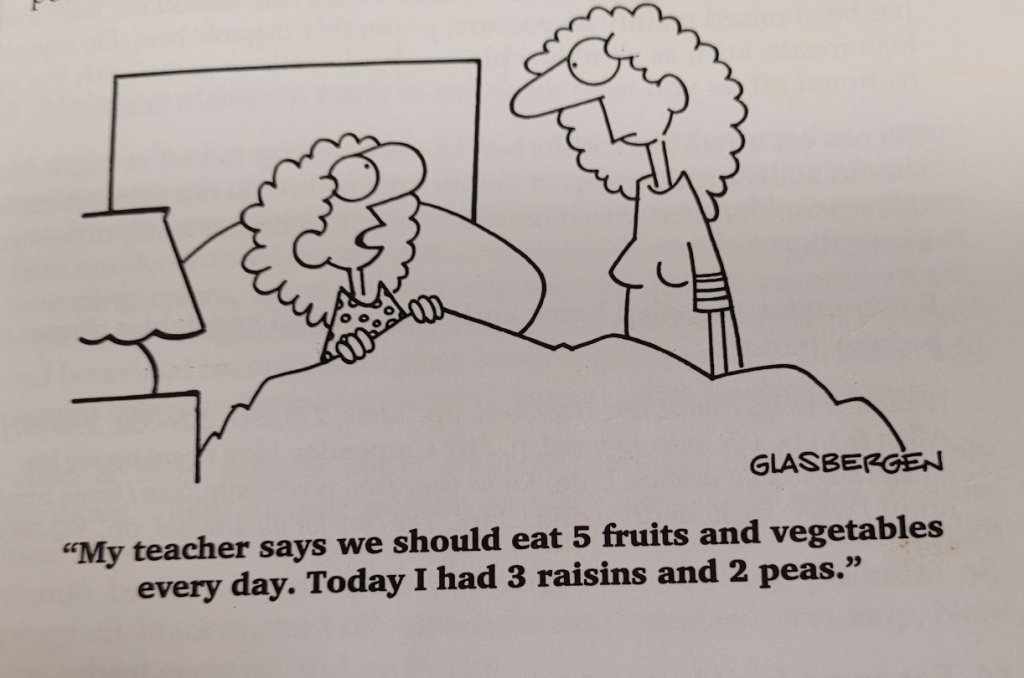
Most of our ancestors lived on meat and three vegetables for dinner at night and this is still the most beneficial type of meal. The more vegetables the better, and five servings a day are recommended (including lunch). The size of a ‘serving’ depends on the type of vegetable. For most it equals a cup. It is always best to cook your own so you know the origin of the food. Do not overcook. The less it has been cooked the more vitamins that have been retained in the vegetable. Potatoes provide many vitamins and minerals but they are concentrated just under the skin so they are better in their jackets, but do not use foil. Wash them thoroughly to remove toxins. Scrub hard with a stiff brush and cut away blemishes. As they contain complex carbohydrates, they can raise blood sugar levels quickly so should not be eaten on their own and should certainly not be deep-fried as potato chips for reasons explained in #33.
Animal products are essential for optimum growth and healthy reproduction, but the desirable amount of meat in your diet depends on your genetic makeup and on hormonal factors. Red meat is a good source of protein, and small servings will do no harm to most people, particularly if your ancestors were meat eaters. Eat liver regularly, because along with eggs and green leafy vegetables, liver is one of the most nutritious foods available. Do not eat a large amount of protein in the evening. The majority of your protein should be consumed at breakfast.
Red meat takes longer to digest than white meat such as chicken or turkey, so you should not overdo the amount of red meat. While your internal systems are digesting food, their ability to detox other areas
of your body is decreased. It is important to give your body a rest from digesting food, hence the value of fasting as explained in #63
Possibly the greatest danger with red meat comes from animals raised in feedlots on grains laden with pesticides, or even worse on soy feed, then injected with steroids to make the meat tender, and treated with antibiotics to stave off infections that result from poor diet and crowded conditions. It follows that you should eat beef that has been raised mainly on pasture, preferably organic beef. Do not eat lean meats, such as skinless chicken, beef, lamb or game with the fat trimmed off, as you need those fats in order to remain healthy.
Do not eat anything within two hours of going to bed at night. You should allow meals to digest before retiring but do not skip a meal for this reason. It is better to have the meal late than not at all, unless you are fasting.
If you prefer, the salad lunch and the meat and vegetables dinner can be interchanged.
[Fallon & Enig, Nourishing traditions, pp. 30-31, 279, 317, 329-330, 396-397; Allan & Lutz, Life without bread, p. 216; Carpender, How I gave up my lowe fat diet and lost 40 pounds; Enig, Know your fats, http://www.enig.com/trans.html; http://www.westonaprice.org: Clark, The cure for all diseases, pp. 392-393, 424]
#4 Eat some fruit but not to excess
Fruit is nutritious, but some types contain more sugar than others. Some of the best fruits are papaya (pawpaw), kiwi fruit, cantaloupe (rock melon), pineapple, honeydew, strawberries, raspberries and blueberries. Bananas are nutritious and contain potassium but they contain excessive amounts of sugar so they should generally be avoided. You should eat two or three pieces or serves of fruit per day, but no more.
Cancer cells love an acidic, anaerobic environment so you are i cancer to strike if your body is acidic and you are not getting sufficient exercise. Many people on western diets are acidic and need to take action to increase their pH. One of the causes of acidity in our bodies is an excess of sugar so you should eliminate this from your diet as much as possible, remembering that most processed foods contain sugar. You should also drink plenty of water to assist your kidney function. inviting in health food stores past cute and d
As with vegetables, always buy locally produced fruit, preferably organic or from a market where you can determine its origins. Always wash fruit before eating it to remove any poisons that may be on the outside, but this does not remove any toxins that are inside. Remember that most commercial fruit and vegetables do not contain
the vitamins and minerals that they once did, in which case nutritional supplementation will be necessary.
Do not drink commercial fruit juices as they usually contain excessive amounts of sugar, even when they say that no sugar has been added.
[Fallon & Enig. Nourishing traditions, pp. 47, 52, 106-111; Allan & Lutz, Life
without bread, pp. 138, 217]
#5 Make a nutritious protein drink
A protein drink mixed in a blender is a great way to ensure that you are getting enough protein. Many different recipes are available but you can invent your own from the following list of suitable ingredients: goat’s milk or raw unpasteurised cow’s milk, plain whole milk yoghurt, whipping cream, whey powder, eggs, coconut milk, coconut cream, apple cider vinegar, raw honey, bee pollen, pumpkin seeds, flax seeds and beneficial bacteria from your health food store or pharmacy Add papaya (pawpaw), pineapple, strawberries or blueberries to taste.
Fallon & Enig suggest some other super-foods which are highly nutritious. These include acerola powder, amalaki powder, azomite mineral powder, blue-green algae, spirulina, chlorella, bitters, high vitamin butter oil, cod liver oil, colostrum, evening primrose oil, borage oil, black currant oil, glandular and organ extracts, kelp, Noni juice, wheat germ oil and probotics.
As discussed in #35, do not use products containing soy.
[Fallon & Enig, Nourishing traditions, p. 585, 616-620; Carpender, How I gave up my low fat diet and lost 40 pounds, pp. 173-179, 184; Nutrition Diagnostics, Back to cooking basics, p. 153, http://www.ericdavisdental.com/nutritional. htm; Daniel, The whole soy story]
#6 Make your own vegetable and fruit juices
Every household should have a juicer to produce raw vegetable juices. Juicing is powerful because it gives a concentrated drink of readily available nutrients, including antioxidants and enzymes. With the pulp removed, your body will quickly assimilate the nutrients. The more different coloured vegetables the better. Beetroot is particularly good as it is regarded as a blood cleanser and blood tonic. It aids Hood circulation by stimulating the liver and improving the function of the liver, kidneys and gallbladder. You can add some fruit to taste as suggested in #5 but limit the quantity because of the amount of sugar that fruit contains. Fallon & Enig provide recipes for a number of different tonics, A quick and easy alternative is to buy Vegetable Juice Crystals, which
contain all the nutrients of the original vegetables. Simply add the carrot, barley grass and beetroot crystals to water and drink. [Fallon & Enig, Nourishing traditions, pp. 608-615; Bridgeman, Daniel’s diet, pp. 27, 113-116; De Haas, Aloe Vera, p. 112]
#7 Eat butter
Butter is a highly nutritious food made from cream. It contains lots of fat-soluble vitamins and important trace minerals. Also, the saturated fat in butter enhances your immune function, protects your liver from toxins, provides nourishment for the heart in times of stress, gives stiffness and integrity to your cell membranes, and aids in the proper utilisation of Omega-3 essential fatty acids.
Cholesterol is not an issue of concern for most of the population, as discussed in the section about misconceptions. Many people would be healthier if their cholesterol level was higher. Saturated fats were unfairly maligned by several 1980s authors, and these myths have been perpetuated by drug manufacturers and the media. They do not cause disease when consumed in normal quantities, on the contrary they are biochemically vital to the human body.
Use normal hard butters in preference to soft butters as these have had certain beneficial fatty acids removed from the final product to make them more spreadable and so more saleable. Organic products are preferred, in order to avoid the fat-soluble toxins that accumulate in fat.
(Fallen & Enig, Nourishing traditions, pp. 4-20, 294, 618; Allan & Lutz, Life without bread, p. 215, http://www.westonaprice.org: Enig, Know your fats, PP. 193, 200; http://www.enig.com/trans.html; Ravnskov, The cholesterol myths, p. 89]
#8 Eat good fats and oils
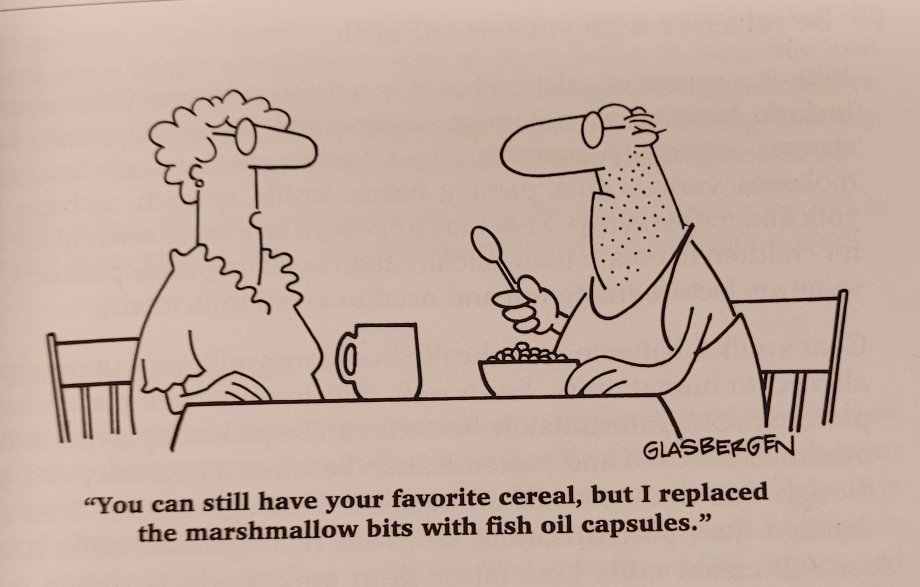
Cold pressed flax oil, linseed oil or fish oil are essential in order to obtain sufficient Omega 3 essential fatty acids. Other oils that have been used for centuries by healthy people include coconut oil, palm oil palm kernel oil, red palm oil, cold pressed olive oil, sesame oil, peanut oil and all other nut oils.
In addition to butter, nutrient-rich fats that have nourished healthy
populations for thousands of years include beef and lamb tallow,
lard, and chicken, goose and duck fat. It is not only safe but desirable
that you consume these products.
Use only cold pressed olive oil, butter or lard for cooking. If you use olive oil and butter together the butter will not burn. For reasons explained in #33, do not cook with flax, canola, safflower or sunflower
[Fallon & Enig, Nourishing traditions, pp. 4-20, 127-128; Allan & Lutz, Life without bread, pp. 135, 215; Carpender, How I gave up my low fat diet and lost 40 pounds, p.105; Clark, The cure for all diseases, p. 517; Enig, Know your fats, http://www.enig.com/trans.html; http://www.westonaprice.org/knowyour fats/index.html]
#9 Be selective with your use of milk
Milk is a source of calcium but it is not the only one. Other s include bone meal, dolomite, sesame and sunflower seeds, kelp, sources cheeses especially parmesan and Swiss, sardines, caviar, carob, molasses, various nuts, parsley, beans, lentils, spinach, cabbage, egg yolk and maple syrup. Milk may appear to be a more convenient way for children to obtain their calcium than by eating these products, but some are lactose-intolerant and need to avoid milk totally.
Goat’s milk is better for your health than cow’s milk as it is more closely aligned to human milk. Fresh milk that has not been pasteurised is preferred, but unfortunately bacteria can be picked up when milking machines are used and pasteurisation becomes a necessary evil, even though this does not kill all bacteria. Homogenisation does more damage than pasteurisation, so avoid homogenised milk. Always use full cream milk. Low fat or skim milk products should not be consumed, as the most beneficial products have been removed in the manufacturing processes. Furthermore, all dairy products need at least 2% fat to enable you to absorb the calcium in them.
Do not consume flavoured milks with added colours, flavours, preservatives and sugar, and for reasons discussed in # 35, do not drink soy milk under a any circumstances.
[Fallon & Enig, Nourishing traditions; Price, Nutrition and physical degeneration, p.271; Salaman, Foods that heal, p. 361; Clark, The cure for all diseases, pp. 216, 517; Nutrition Diagnostics, Back to cooking basics, p. 1, http://www. ericdavisdental.com/nutitional.htm]
#10 Eat soft cheeses
Soft cheeses are an excellent source of easily absorbed protein, fat- soluble vitamins, beneficial bacteria and food enzymes. These are the ones that that leave an indentation when you press them with your finger, for example, Havarti, Dofino and Edam. Sheeps’ and goats milk cheeses are particularly healthy as they have a different ty acid profile. Also, the cheeses with a pungent odour such as blue, brie, Limburger and Bierkase contain healthy live organisms. Ricotta and cottage cheese are also healthy choices, provided they are not fat reduced. Hard cheeses contain few live organic enzymes, but do have some health advantages, such as their ability to bind free iron due to their lactoferrin content. Heavily processed cheese should be avoided. Soft cheeses are the better choice for re-establishing ‘friendly bacteria”. Do not eat imitation processed cheeses and ‘cheese food’.
[Fallon & Enig, Nourishing traditions, pp. 80-81; Nutrition Diagnostics, Back to cooking basics, pp. 1, 3, http://www.ericdavisdental.com/nutritional.htm%5D
#11 Eat natural yoghurt
Natural yoghurt is a dairy product that is highly nutritious. It does not have the concerns that milk has, as most of the lactose has been digested by friendly bacteria. You should consume it regularly. It is even better if it contains acidophilus, as this supplies good bacteria to your intestines. Do not use yoghurts that contain added sugars and fruits. Some of the natural yoghurts have quite attractive flavours, forexample ‘Greek style’. Buttermilk is also a healthy choice. [Fallon & Enig, Nourishing traditions, pp. 80-81; Allan & Lutz, Life without bread, p. 128; Carpender, How I gave up my low fat diet and lost 40 pounds, pp. 128-131]
#12 Eat raw seeds and nuts
Seeds and nuts contain essential amino acids and trace minerals, so you can and should eat plenty of pumpkin seeds, sunflower seeds, sesame seeds, and any of the tree nuts, for example, almonds, pecans, walnuts, hazelnuts, Brazil nuts and macadamias.
Use raw ones only, preferably organic. Avoid toasted or roasted seeds or nuts and avoid mould. Chew them well. Plain, natural peanut butter can be used.
[Fallon & Enig, Nourishing traditions, pp. 47, 452-454, 495; Allan & Lutz, Life without bread, p. 188; Carpender, How I gave up my low fat diet and lost 40 pounds; Nutrition Diagnostics, Back to cooking basics, p. 5, http://www.ericdavisdental.com/nutritional.htm%5D
#13 Eat onions and garlic
Onions contain carotenoids, Vitamins B and C, calcium, magnesium, potassium and sulphur. They have many medicinal properties, including improvement in kidney function and antibacterial qualities. They are helpful in breaking up mucus in the throat, lungs and nasal passages. Their concentrated sulphur compounds make them useful in the prevention and possibly treatment of cancer. However, anyone with weak adrenal glands or a sensitivity to sulphur should eat them sparingly
Garlic is a good detoxifying agent. It is a rich source of selenium and the sulphur compounds that bind to mercury and other heavy metals, and therefore facilitates the excretion of these contaminants. It also prevents blood clots, and supports the existence of friendly bacteria while keeping unfriendly bacteria away.
[Fallon & Enig, Nourishing traditions, pp. 96, 390-391; Nutrition Diagnostics, Back to cooking basics, p. 8, http://www.ericdavisdental.com/nutritional. htm]
#14 Use spices, herbs and salt with your food
Spices and herbs contain lots of trace minerals. Flavour your food with garlic and onion powder, paprika, cloves, cinnamon, cayenne pepper, basil, curry, black pepper, dried parsley and fresh herbs, especially if you have grown your own. However, people with poor health should limit the amounts consumed.
Salt follows oxygen and water as the most crucial ingredient for life. Our stomachs need hydrochloric acid to digest protein. The chlorine portion comes from sodium chloride – table salt. If you do not consume enough salt you will invariably have a problem with protein digestion. This can be a cause of bad breath. Salt also provides the sodium that is needed to balance the electrolytes in our bodies. It is particularly important in hot climates if you perspire a lot. Many processed foods and so-called junk foods contain excessive quantities of salt, but if you are following the other recommendations in this book regarding nutrition, it is likely that you will need more salt not less. The extent to which excessive quantities of salt contribute to
bart disease is still being investigated and debated. It seems to have ben overrated by some authors and the popular press. This virtual ban on consuming products with a high sodium content is a matter of serious concern as it can cause salt starvation.
As salt is often processed the best form to use is rock salt, which is unrefined sea salt mined from ancient seabeds. Normal sea salt is likely to contain traces of mercury. We absorb too much of that toxic heavy metal from other sources without adding more in our salt. Fallon & Enig Nourishing traditions, pp. 48-50, 288; Meyerowitz, Water, 1. Nutrition Diagnostics, Back to cooking basics, p. 8, http://www. ericdavisdental.com/nutritional.htm]
#15 Chew your food well and do not dilute it
The acids in your stomach will be able to break the food down more easily if it has already been crunched up as small as possible by your teeth, so chewing your food well will aid digestion.
It is also important not to drink much liquid with a meal, as this dilutes the gastric juices and makes it harder for them to digest your food. Ideally, you should not drink for half an hour before a meal or an hour after. The quicker your food is digested the better. It is not desirable to have it lying in your stomach for hours. [Fallon & Enig, Nourishing traditions, p. 53; Clark, The cure for all diseases, p.295]
#16 Measure and reduce the acidity of your body
The acidity or alkalinity of anything is measured by its pH. If the pH is 7 it is neutral, less than 7 it is acidic and more then 7 it is alkaline. For optimum health the pH of your body should be 7. Acid is transferred from the blood to the stomach at mealtimes for digestion, or otherwise removed with the urine. If your kidneys are functioning poorly the body’s acid levels will increase, which means that the pH will drop below 7.
An easy way to reduce the acidity of your body is to squeeze a tablespoonful of juice from a lemon and add some water. Drink this on rising in the morning, after your evening meal, and before going to bed. This will assist in keeping the pH of your body neutral. The reason that it does this is that a small amount of acid in your stomach will provoke your body into producing alkalis to counteract it. More than enough alkalis will be produced and this will tend to make your body less acidic.
To measure your acidity, buy some litmus paper with an accompanying colour chart from your pharmacy. Test your saliva and urine in the morning to find out what your pH is. If it is acidic, follow the recommendations in this book and the pH will correct itself in time and become neutral.
[Clark. The cure for all diseases, p. 287: http://www.healthrealities.org/ 6subclindefects.htm]
#17 Drink apple cider vinegar
A teaspoonful of apple cider vinegar taken with water before breakfast each morning is reputed to be good for your health. It contains key vitamins, over a dozen minerals, acids, several enzymes and pectin. It assists in keeping the pH of your body neutral and may help to remedy a wide variety of ailments.
Although not evidence based, it is thought that bad breath may often be caused by a lack of hydrochloric acid in the stomach, resulting in poor digestion and an accumulation of undigested putrefying food in the intestines. A tablespoon of apple cider vinegar taken just before each meal may alleviate this problem.
When buying apple cider vinegar it is important to avoid over- processed, diluted, pasteurised, highly filtered, overheated brands. Buy the pure, organic, aged in wood, unfiltered varieties, which are available in health food stores. These also taste better.
[Mindell, Amazing apple cider vinegar; Salaman, Foods that heal, p.74]
#18 Take a high quality multi-vitamin, multi-mineral supplement
Our foods today generally do not contain anywhere near the amount of vitamins and minerals that they once did. Vitamins are destroyed by the processes involved in the storing, packaging, transporting, marketing and cooking of them. Also, all commercial fruit and vegetables are lacking in the trace minerals that the cells of our bodies need. This is because they are being grown in the same ground over and over, and the trace minerals have long since been taken out of the soil and not replaced. Farmers know how important it is to give vitamin and mineral supplements to their animals and they observe the positive results, but often they do not realise that the same situation applies to their own bodies. Surely it is even more important to look after our own bodies than those of our animals.
 Overcoming Anxiety